What does psilocybin do to your brain?

What does psilocybin do to your brain? Here’s what scientists discovered
What if your brain could temporarily work in a completely different way? Not because you’re thinking harder, but because the familiar patterns in your brain begin to change. Humans are creatures of habit. We tend to think in the same ways, react based on familiar patterns, and choose solutions that feel comfortable. That’s useful, but it can also hold us back.
So what happens when those familiar patterns are temporarily disrupted? That’s exactly what researchers at Washington University in St. Louis set out to explore. Their study, published in the scientific journal Nature, offers a fascinating glimpse into what psilocybin does to our brains. And the findings are pretty remarkable.
A look inside the brain on psilocybin
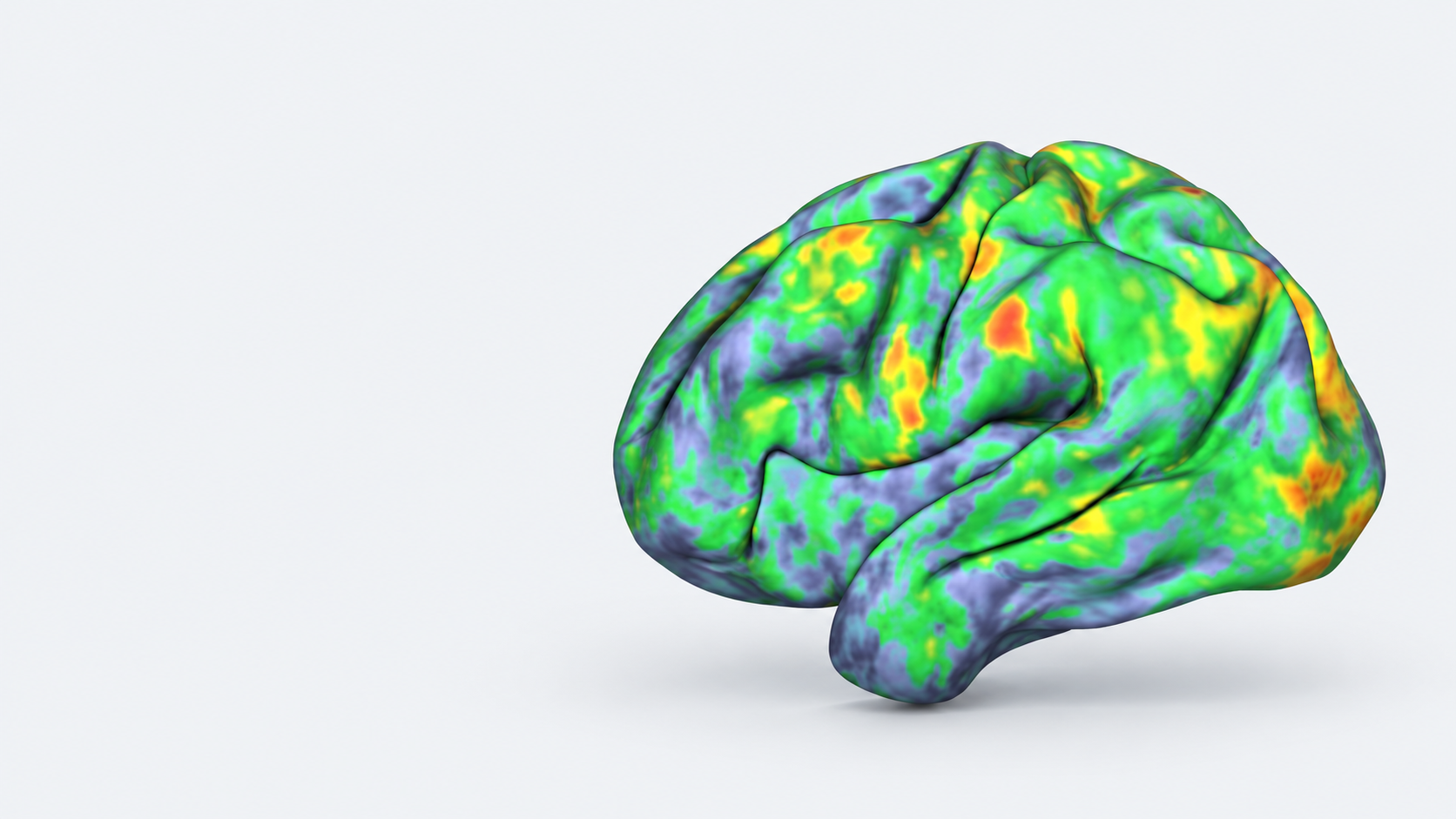
In July 2024, researchers published a study examining the brain activity of seven healthy adults. Under controlled conditions, participants received a dose of psilocybin, the psychoactive compound found in certain types of truffles. Using MRI scans, scientists tracked how different areas of the brain communicated with one another. Not just during the experience, but also in the weeks that followed.
What did they discover? Psilocybin temporarily changed the way brain networks communicate. And the changes were surprisingly widespread.
Your brain loves familiar patterns
To understand why this is so interesting, we first need to look at how our brains normally work. Our brains are made up of different networks that constantly exchange information. Some are involved in attention, while others play a role in memory, emotions, or self-reflection. One of these networks is called the Default Mode Network (DMN). This network is particularly active when you’re:
- Thinking about yourself
- Reflecting on the past
- Imagining the future
- Letting your mind wander
- Thinking about who you are and how others perceive you
- You can think of it as part of your inner world.
This network plays an important role in how we understand ourselves and the world around us. It’s also being studied for its potential connection to overthinking and repetitive negative thought patterns. And interestingly, this was one of the networks most affected by psilocybin.
What happens when your brain networks fall out of sync?
The researchers discovered that psilocybin caused a process known as desynchronization. Normally, certain areas of the brain follow recognizable patterns of activity, working together in a coordinated way. Under the influence of psilocybin, that coordination temporarily changed. The boundaries between different brain networks became less distinct. The changes were particularly significant within the Default Mode Network. Here’s what makes this so fascinating: our brains normally have highly recognizable, individual patterns of activity. So recognizable, in fact, that researchers can identify people simply by looking at their brain scans.
Under the influence of psilocybin, those individual patterns temporarily became much harder to recognize. Once the effects of the substance wore off, most brain networks returned to their usual patterns.
So your brain wasn’t literally being reset. Instead, the way different brain regions communicated with each other changed significantly for a short period of time.
And what happened in the weeks that followed?
Perhaps even more interesting was what researchers discovered after the experience. Although most brain networks largely returned to their normal activity within a few days, one change lasted longer. The connection between the Default Mode Network and a part of the hippocampus remained reduced for up to approximately three weeks. The hippocampus plays an important role in memory and how we process experiences.
Why does this matter? Because scientists are exploring whether changes like these could be related to neuroplasticity, the brain’s ability to adapt, learn, and form new connections. Researchers suspect that temporary changes in brain communication may play a role in some of the effects being investigated in clinical studies involving psilocybin. However, whether this particular change actually leads to increased neuroplasticity in humans still needs further research.
Does this mean psilocybin can change the way you think?
Now that’s an interesting question. We know that our brains are constantly learning and adapting. Yet certain thoughts and reactions can become deeply ingrained over time. Think about those moments when you keep coming up with the same solution, respond to situations in the same way, or struggle to let go of a particular thought. Scientists are investigating whether psilocybin could influence the flexibility of these processes.
The idea behind this is fascinating: when the usual communication between brain networks temporarily changes, it may create room for different ways of processing information. This is one of the reasons why psilocybin is currently being studied in fields such as psychiatry. But there’s an important difference between discovering an interesting neurological mechanism and proving that it improves everyday life. The fact that psilocybin changes brain networks doesn’t automatically mean it’s been proven to make people more creative, improve their focus, or help them break free from old thinking patterns.
So, what about microdosing?
At Fungki, we’re naturally particularly interested in microdosing: taking small amounts of psilocybin-containing truffles. That’s why it’s important to put this research into perspective. Participants in the Nature study received a relatively high dose of 25 milligrams of psilocybin under medical and scientific supervision. That’s very different from microdosing. The changes observed in this study therefore don’t automatically apply to microdoses.
Research into microdosing is also still in its early stages. While people report a wide range of personal experiences, there is currently insufficient convincing clinical evidence that microdosing consistently improves focus, creativity, mood, or mental performance. What this study does show, however, is just how fascinating the interaction between psilocybin and our brains can be, and why scientists are so interested in understanding it further.
A new perspective on the brain
What we find so interesting about this study isn’t just the effect of psilocybin itself. It’s what the research teaches us about our brains. An organ that’s constantly changing, adapting, and far less fixed than we sometimes imagine. We all have our habits and familiar ways of thinking. But our brains aren’t static systems. And that’s exactly what makes research into brain networks, neuroplasticity, and consciousness so fascinating.
At Fungki, we believe in staying curious about your own mind. Not in quick fixes or magical promises, but in awareness, knowledge, and continuously exploring what makes our brains so remarkable. Because maybe thinking differently starts with understanding how you think. Curious to explore the world of microdosing for yourself? We created our Beginner Protocol as an introduction to microdosing with psilocybin-containing truffles.
Further Reading
Curious about the science behind psilocybin and how researchers are studying its effects on the brain? Explore the original sources:
- Psilocybin desynchronizes the human brain, Nature (2024)
- How psychedelic drugs alter the brain, NIH
- This is your brain on psilocybin, CNN
Disclaimer: This article is intended for informational purposes only and does not constitute medical advice. The study discussed involved a high dose of psilocybin administered under controlled conditions. Its findings do not establish the effectiveness or safety of microdosing.