


CART  (0)

FREE SHIPPING ON ORDERS OVER €50

Your shopping cart is currently empty Visit shop
Woman holding a few small microdosing truffles in her hand

MICRODOSING WITH TRUFFLES: THE COMPLETE GUIDE

For those who want to train their minds as intentionally as they train their bodies.

Microdosing with truffles means taking a small amount of psilocybin without aiming for a full psychedelic experience. You follow a structured routine of dosing and rest days, often over eight weeks. But what does microdosing actually do? What do people experience, what does science say, and how do you know if it's right for you? In this guide, we'll walk you through the different protocols, available research and potential risks. So you can make an informed decision for yourself.

Updated November 2026

THE BASICS

What is microdosing with truffles?

Microdosing means taking a small amount of psilocybin-containing truffles without aiming for a full psychedelic experience. The dose is typically low enough to avoid a trip, although effects can vary from person to person.

Microdosing isn't about having an intense experience. It's about consciously exploring a structured routine of dosing and rest days, paying attention to how you feel and whether you notice any changes. At Fungki, we use fresh Psilocybe Mexicana truffles, grown in the Netherlands, pre-weighed and individually packaged.

READ THE FULL ARTICLE →
Woman taking a truffle microdose at breakfast
Woman holding psilocybin truffles in her palm against a blue background

Curious minds go further

TRAIN YOUR MIND LIKE AN ATHLETE

Who is microdosing for?

You train your body, pay attention to your sleep and think about what you eat. But how much attention do you give your mind? Microdosing sparks the curiosity of people who consciously invest in their personal growth. People who demand a lot from their minds, love exploring new ideas and want to discover what works for them.

The entrepreneur

Always juggling ideas, responsibilities and ten things at once. You're used to thinking ahead, making decisions and challenging yourself.

The creative maker

Curious by nature. You seek new perspectives, love experimenting and prefer carving your own path.

The ambitious thinker

You're driven by personal growth. You ask questions, explore new possibilities and aren't content with simply accepting the status quo.

Microdosing is not a substitute for sleep, rest or professional support when you're struggling. It isn't suitable for everyone, and many of its claimed benefits have yet to be convincingly demonstrated by scientific research. Read when microdosing may not be suitable for you

How microdosing works in practice

Microdosing follows a structured routine of dosing and rest days. You follow a protocol, stay aware of potential effects and consciously reflect on your experiences.

  1. Choose a consistent routine

    With microdosing, you alternate dosing days with rest days. Which routine suits you depends on your experience. New to microdosing? The Beginners Protocol is designed to help you get started gradually.

  2. Prepare for your dosing day

    Read the instructions and safety information beforehand. For your first time, choose a quiet day without important commitments. Even a small dose can have noticeable effects.

  3. Pay attention to what you notice

    Take time to reflect on how you feel, both on dosing days and rest days. You can keep a journal to track your experiences over time, without jumping to conclusions about what caused any changes.

The three microdosing protocols

Three protocols, each with its own schedule of dosing and rest days. Beginners is designed to introduce you to microdosing. Advanced and Expert are for those who already have experience and are looking for a different routine.

START HERE

Beginners Protocol

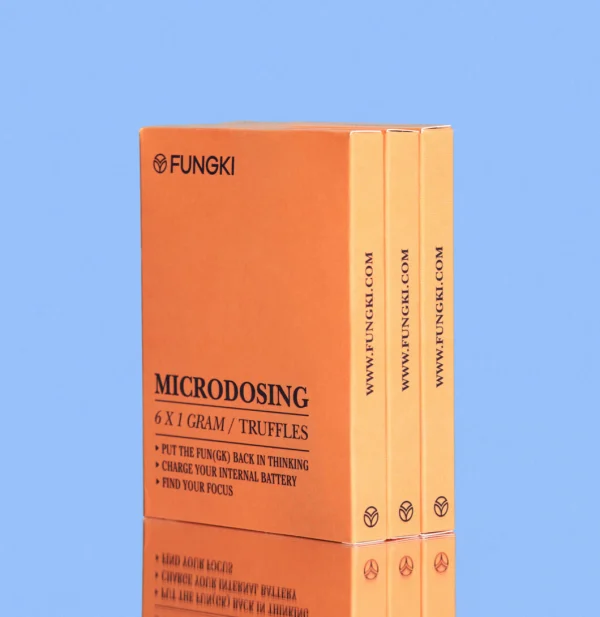
1 day a dose, 2 days of rest. New to microdosing? This protocol follows the well-known James Fadiman schedule and is designed to help you get started gradually.

18 microdoses · about 8 weeks

VIEW BEGINNERS · € 45,00

NEXT STEP

Advanced Protocol

1 day a dose, 1 day of rest. For those who already have experience with microdosing and prefer a more regular routine, alternating between dosing and rest days.

30 microdoses · about 8 weeks

VIEW ADVANCED · € 75,00
FITS YOUR WORKWEEK

Expert Protocol

4 days a dose, 3 days of rest. For experienced users who want to follow a consistent dosing schedule during their workweek, with three consecutive rest days.

36 microdoses · about 8 weeks

VIEW EXPERT · € 90,00

More about schedules, rest days and the break after 8 weeks: all about microdosing protocols

HONEST EXPECTATIONS

No miracle cure. But worth exploring?

What can you expect from microdosing? That varies from person to person. Some users describe changes in their concentration, mood or creativity. Others notice little difference or experience unwanted effects. So what can you expect, and what shouldn't you expect? We've brought together the most commonly reported experiences and the important caveats.

WHAT USERS REPORT

  • Finding it easier to start a difficult task
  • Staying focused on one task at a time
  • Feeling calmer on busy days
  • New ideas or different perspectives
  • Better sleep or waking up feeling more rested
  • Feeling less easily distracted

WHAT NOT TO EXPECT

  • Guaranteed improvements in concentration or creativity
  • A dramatic change after a single dose
  • A treatment for symptoms or medical conditions
  • The same effects for everyone
  • No risk of unwanted effects
  • Better results simply from taking more

Many people have a clearer picture of their own experience after around three weeks. This isn't a fixed timeline: some notice something sooner. It's important to know that scientific research has not yet convincingly demonstrated the commonly claimed benefits of microdosing. Expectations and placebo effects may also play a role.

“I get distracted less, finish tasks more often and make decisions faster.”
Ferdinand, 35, creative entrepreneur · week 3 · Read his diary
“Procrastination really went down to a minimum. Not because I forced myself, but because the threshold to get started was simply lower.”
Leendert, owner of a digital agency · week 3 · Read his diary

Personal experiences, not promises. Read all microdosing diaries

RESEARCH

What does science say?

Microdosing is attracting increasing attention from scientists. Some studies show interesting results, while others find little difference compared to a placebo. What do we know so far, and which questions remain unanswered? These three studies show why the answer isn't so straightforward.

VIEW ALL RESEARCH ARTICLES →

OBSERVATIONAL · 2022

Microdosers report improvements in mood

Researchers followed 953 microdosers and 180 non-users. After approximately one month, microdosers reported greater average improvements in mood and mental health. However, because participants knew what they were taking, expectations may have influenced the results.

Rootman et al., Scientific Reports

WITH PLACEBO · 2022

Not all reported benefits are confirmed

In a double-blind study, researchers found no convincing evidence of the expected improvements in well-being and cognitive functioning compared to a placebo. Some measurable effects were observed, however. The findings highlight the importance of controlled research.

Cavanna et al., Translational Psychiatry

IN ANIMALS · 2023

Interesting findings at low doses

Researchers studied the effects of repeated low doses of psilocybin in rats. They observed, among other things, greater resilience to stress and changes in brain connectivity. These findings are interesting, but they cannot be directly applied to humans.

Kiilerich et al., Molecular Psychiatry

SAFETY

When is microdosing not suitable?

Even a low dose of psilocybin can carry risks. In certain situations, we advise against microdosing. Avoid combining microdosing with alcohol or other recreational drugs, and always check whether any medication you're taking could interact with psilocybin.

  • You take certain medications
  • You are pregnant or breastfeeding
  • You have an increased risk of psychiatric complications
  • You have a heart condition or are under 18
VIEW ALL CONTRAINDICATIONS →
Annick Pieters MSc in an online consultation

NOT SURE?

Talk to Annick Pieters MSc first

Curious about microdosing but still have questions? In a personal 25-minute online consultation, independent psychologist Annick can help you explore them. Whether it's about your expectations, the different protocols or potential risks. You can also book a check-in if you've already started a protocol.

  • Independent psychologist, not affiliated with Fungki
  • Space to discuss questions about safety and medication
  • Before starting or as a check-in during your protocol
BOOK A CONSULTATION WITH ANNICK € 56,00 · 25 minutes

Frequently asked questions about microdosing

How many grams of truffles are in a microdose?

When microdosing with fresh truffles, amounts between 0.5 and 1.5 grams are often mentioned. Each Fungki microdose contains 1 gram of fresh Psilocybe Mexicana truffles, pre-weighed and individually packaged. As truffles are natural products, the amount of active compound can vary between doses.

Will a microdose make you trip?

A microdose is intended to avoid a full psychedelic experience. However, you may still notice effects, such as changes in your mood, perception or concentration. Sensitivity to psilocybin varies from person to person, and taking too high a dose can still lead to a psychedelic trip.

Can you work as usual while microdosing?

Many people try to incorporate microdosing into their daily routine. However, even low doses can affect concentration and reaction time. For your first experience, choose a quiet day without work or other important commitments. Avoid driving, operating machinery and other potentially dangerous activities while you may be under the influence.

Why are rest days important?

Rest days are part of established microdosing schedules, such as the Fadiman Protocol. They give you time to observe your experiences without taking a dose every day. Tolerance can also develop with repeated use. The ideal dosing schedule has not yet been scientifically established.

Is microdosing addictive?

Psilocybin is not generally considered physically addictive. Physical dependence does not typically develop, although repeated use can lead to tolerance. It's also important to reflect critically on your use and avoid feeling that you cannot function well without microdosing.

What's the difference between truffles and magic mushrooms?

Truffles and magic mushrooms come from certain fungi and can both contain psilocybin. Magic mushrooms are the above-ground fruiting bodies, while truffles are underground structures known as sclerotia. In the Netherlands, fresh psilocybin-containing truffles can legally be sold, while magic mushrooms are prohibited.

Can microdosing affect your sleep?

Yes, some users report sleeping better, finding it easier to unwind or waking up feeling more rested. Others notice no difference or experience more restless sleep. Scientific research has not yet convincingly demonstrated that microdosing improves sleep quality. Effects vary from person to person.

How long can you store truffles?

Store your truffles in the fridge, in their original sealed packaging. Always check the expiry date on the box and follow the storage instructions. Once opened, their shelf life and quality may decrease.

Beginners Protocol

Ready to get started? Start slow.

Curious about microdosing? The Beginners Protocol is designed to help you explore it at your own pace. With 18 pre-weighed microdoses, a structured routine and clear instructions. So you know what you're getting into and can discover for yourself whether microdosing is right for you.