Microdosing vs. macrodosing with truffles: What does the science say?


Microdosing vs. macrodosing with truffles: What does the science say?
Truffles are used in two very different ways: in a tiny “microdose” that barely affects your daily functioning, or in a large “macrodose” that causes a full psychedelic trip. Both methods have their supporters, but scientific literature and user experiences point to a clear difference in risk, impact and applicability. In this article, we compare the arguments in favour of microdosing and against macrodosing, based on clinical research and practical experience.
What is microdosing with truffles?
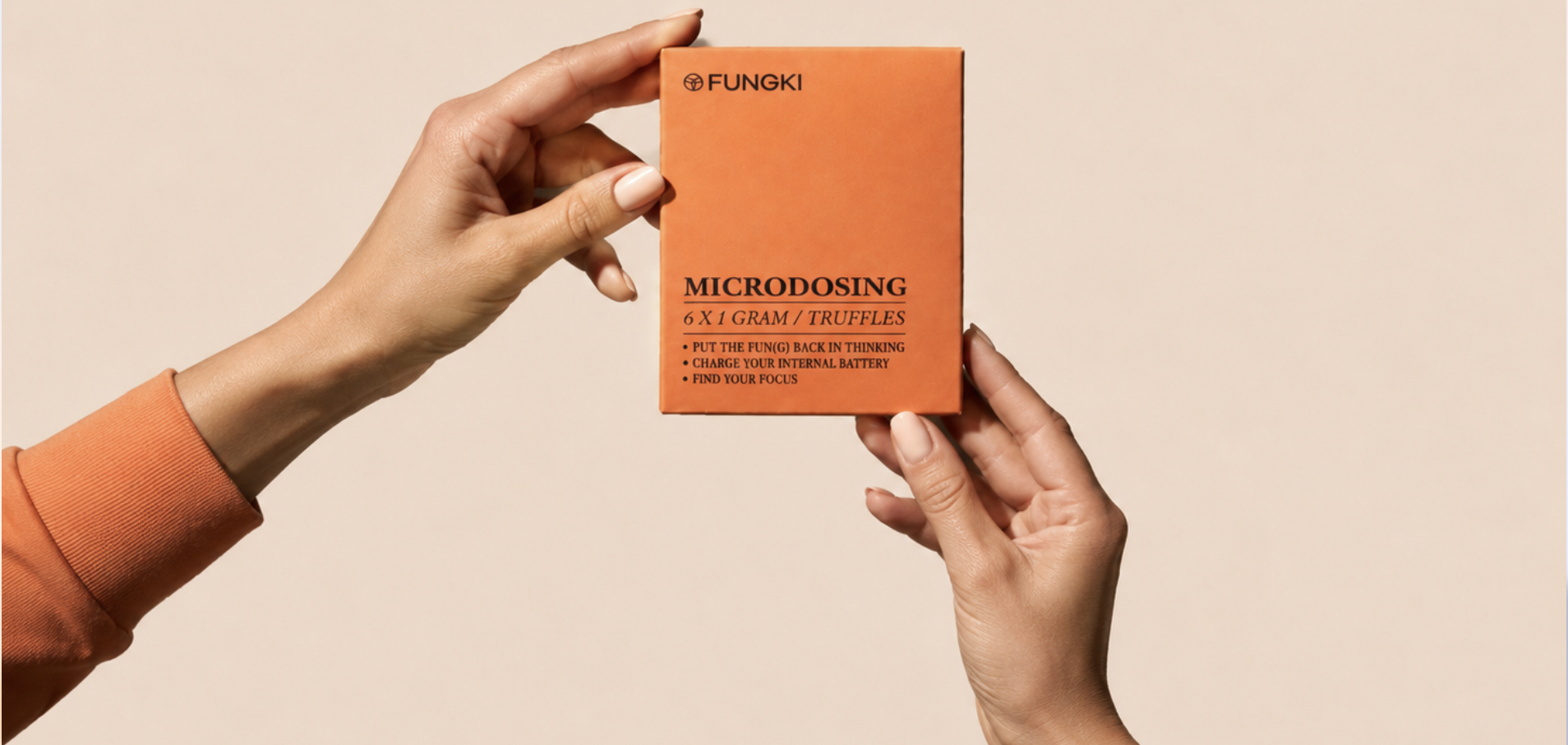
Microdosing means taking a sub-perceptual amount of truffles, usually between 0.5 and 2 grams of fresh truffles. At this dosage, you do not experience psychedelic effects: no visual distortions and no altered state of consciousness. You can continue working, driving and attending social engagements as usual. Users often follow a schedule, such as one day of microdosing followed by one or two days off.
What is macrodosing with truffles?
Macrodosing refers to a full, consciousness-altering dose, often 15 grams or more of fresh truffles. This leads to an intense psychedelic experience that usually lasts four to six hours, with visual and emotional effects and a temporary loss of touch with ordinary reality. In therapeutic settings, this type of dosage is usually supervised by a professional.
Why microdosing is more practical and safer
No disruption to your daily life
With a microdose, you remain functional. No hallucinations or distortions of reality occur, meaning that working, driving and social interaction remain possible as usual.
Subtle, lasting benefits
Users report a slight increase in focus, creativity and productivity, as well as a more stable mood throughout the day. The effect is often described as a mild background improvement rather than an overwhelming experience.
Virtually no risk of a ‘bad trip’
Because the dose is so low, the likelihood of anxiety, panic or unresolved emotions surfacing is virtually absent. This makes microdosing an accessible option for use as part of a daily routine.
Accessible without guidance
A microdose does not require a ceremonial facilitator or medical supervision. You can integrate it into a normal working day or private day.
Why macrodosing carries greater risks
Significant physiological and mental impact
A macrodose causes a trip lasting several hours, accompanied by a substantial temporary spike in the stress hormone cortisol. This can be mentally demanding and exhausting, especially without proper preparation. At the same time, it can also be a beautiful experience.
Increased risk of anxiety and panic
Without the right preparation, environment and guidance — known as set and setting — a macrodose can turn into an anxious or overwhelming experience. In people with underlying mental health issues, it may worsen symptoms rather than relieve them.
Possible temporary physical side effects
Publicly shared biomarker data from well-known self-experiments, such as those by Bryan Johnson, showed a temporary decline in sperm quality following a high dose of psilocybin. These findings are not based on large-scale clinical research and should therefore be interpreted with caution, but they do suggest that a macrodose is more than just a mental experience.
A greater practical commitment
A macrodose requires not only a full day for the ceremony itself, but often an additional day to process and integrate the experience.
Why macrodosing also has value
The fact that macrodosing carries greater risks does not mean that it is less valuable for everyone. Many people do benefit from a macrodose: an intense trip can lead to deep insights, emotional breakthroughs or a different perspective on ingrained patterns. The challenge lies not so much in the experience itself, but in what you do with it once the trip is over.
To help these insights truly settle, it is often recommended in practice to follow a macrodose with a period of microdosing. A follow-up programme of around two months gives you the time to actively work with the insights you gained, instead of allowing the feeling to fade after a few days. Here, microdosing acts as a kind of reminder of the trip: it keeps the focus and feeling of the experience alive for longer, while allowing you to continue functioning normally in your daily life. This combination — first a macrodose for the breakthrough moment, followed by a period of microdosing for integration — is considered by many facilitators and users to be a more effective approach than using either method in isolation.
At Fungki, we often recommend the Advanced Protocol for the best possible integration after your truffle ceremony. This provides a consistent intake of truffles and gives you two months to properly process and integrate your insights.
What does science say about this difference?
Research into microdosing is growing rapidly, but the evidence is still far from conclusive. Several findings are worth highlighting, including the important critical caveats.
- Observational research points to improvements. A large-scale prospective study published in Scientific Reports in 2022 followed 953 people who microdosed with psilocybin and 180 non-microdosers for approximately thirty days. The microdosers reported greater improvements in mood and lower levels of depression, anxiety and stress than the control group, particularly among participants who already had mental health complaints. The researchers themselves emphasised that this was not a placebo-controlled study, meaning expectation effects may have played a role. . (Rootman et al., 2022, Scientific Reports)
- A qualitative survey of 278 microdosers produced more specific figures: improved mood (26.6%) and better focus (14.8%) were the most frequently reported benefits, while physical discomfort (18.0%) and increased anxiety (6.7%) were the most commonly reported disadvantages. (Petranker et al., 2019, PubMed)
- Placebo-controlled research is more critical. A double-blind, placebo-controlled study using 0.5 grams of dried mushrooms found no significant benefit of microdosing on creativity, cognition or well-being compared with placebo. The researchers concluded that expectation probably explains a large proportion of the anecdotal benefits. This puts the observational findings above into perspective: users who know they are taking an active dose may report more positive effects simply because they expect them. (Cavanna et al., 2022, Translational Psychiatry)
- Stress resilience: promising, but so far only demonstrated in animals. A neurobiological study from 2023 showed that repeated low doses of psilocybin increased resilience to stress in rats and strengthened connections in a specific area of the brain, without signs of anxiety or impaired functioning. This was an animal study rather than research in humans, so the results cannot be directly translated to human use. However, it does offer a possible biological mechanism that could support further research in humans. (Kiilerich et al., 2023, Molecular Psychiatry)
- Cortisol spikes following a macrodose: research is ongoing. Clinical trials are currently investigating how a macrodose of psilocybin causes a spike in the stress hormone cortisol, and whether altering this cortisol response changes the outcome of the experience. This confirms that the physiological impact of a macrodose is a real and active area of research, although the final results of these trials have not yet been published.
In conclusion, the current scientific evidence is more nuanced than is often suggested. Observational studies and user experiences consistently point to potential benefits of microdosing, but stricter placebo-controlled studies indicate that a substantial part of the effect may be psychological — driven by expectation — rather than purely pharmacological. This does not mean that microdosing does not work, but it does mean that “proven” is too strong a word based on the research currently available.
Conclusion: which option is right for you?
If you are looking for more structure, creativity and a more stable mood in your daily routine, microdosing is a logical and relatively safe choice for many users, although the scientific evidence is not yet conclusive. Macrodosing can provide valuable insights and breakthroughs, but requires more preparation, guidance and time, including after the trip itself. A combination — first a macrodose, followed by a period of microdosing to help anchor the insights — is seen by many as a powerful approach.
Truffles are legally available in the Netherlands, but that does not mean every dosage is suitable for everyone. Are you unsure about what fits your situation, or do you have a history of mental health issues? Consult a doctor or qualified facilitator first.
Frequently asked questions
What is the difference between microdosing and macrodosing with truffles?
Microdosing involves taking a sub-perceptual amount — approximately 0.5 to 2 grams — without noticeable psychedelic effects. Macrodosing involves taking a full dose, often 15 grams or more, which causes an intense trip lasting several hours.
Is microdosing with truffles safe?
With a microdose, the risk of a negative experience such as anxiety or panic is very low because the dosage is too small to produce psychedelic effects. However, more large-scale, long-term research is needed before definitive conclusions can be drawn.
Can you drive after taking a microdose of truffles?
A microdose should not cause hallucinations or distortions of reality, and users report that they can continue everyday activities such as working. However, everyone responds differently. Do not drive if you notice any change in your perception, concentration or reaction time.
Does macrodosing have negative side effects?
A macrodose can place a significant physiological and mental strain on the body, including a spike in the stress hormone cortisol and an increased risk of anxiety or panic without appropriate guidance. Some self-experiments also point to temporary physical side effects. At the same time, with proper guidance and appropriate screening beforehand, it can be a beautiful experience.
Can you combine macrodosing and microdosing?
Yes, this is often done: first a macrodose for deeper insight or a breakthrough, followed by a period of microdosing — often around two months — to help integrate those insights into daily life. This can help keep the experience present for longer and give you time to actively apply what you learned.
Are truffles legal in the Netherlands?
Yes, magic truffles are legally available in Dutch smart shops, unlike psychedelic mushrooms, which fall under the Dutch Opium Act.