Focus supplement: what actually works for concentration

Focus supplement: what actually works for concentration?
You’re looking for something that helps you think more clearly, switch faster and stay focused for longer. The market for focus supplements is big, crowded and confusing. Caffeine, omega-3, magnesium, adaptogens, nootropics, Lion’s Mane, and now also psilocybin microdosing. What’s hype, and what actually has an effect?
In this blog, we compare the most well-known focus supplements honestly and with evidence in mind. We’ll also explain why Fungki takes a different approach.
Why your concentration drops
Before reaching for a supplement, it helps to understand what is actually happening when your focus starts to fade. Concentration problems rarely have one single cause. Lack of sleep, chronic stress, too much stimulation, a diet that doesn’t give your brain what it needs, or a brain that simply works differently, as is the case with ADHD. Supplements can offer support, but they don’t solve the underlying cause. That’s important to be honest about.
What supplements can do is help your cognitive systems function better. Your working memory, your attention span, your ability to filter out irrelevant stimuli and your energy levels are all areas that can be influenced by the right compounds.
The most well-known focus supplements at a glance
Caffeine
The most widely used psychoactive substance in the world. Caffeine blocks adenosine receptors in the brain, making you feel less tired and more alert. It works quickly and reliably. The downside: tolerance build-up, dependency, sleep disruption when used after midday, and a crash once it wears off. For short-term focus, it works. As a structural solution for concentration problems, it is not enough.
Omega-3 fatty acids
EPA and DHA, the fatty acids found in oily fish or algae oil, are building blocks for brain cell membranes. Getting enough omega-3 through your diet is associated with better cognitive functioning, less mental fatigue and a more stable mood. It is not a quick fix, but rather a long-term investment in your brain.
Magnesium
Magnesium is involved in hundreds of processes in the body, including the production of neurotransmitters and the regulation of stress. Many people are deficient without knowing it. Magnesium L-threonate shows the most promise for cognitive support, as it appears to cross the blood-brain barrier more effectively than other forms.
Rhodiola Rosea
An adaptogenic herb that helps the body deal with stress and mental fatigue. Studies suggest that rhodiola can help maintain cognitive performance under stressful conditions. It does not work equally well for everyone, but it is well-supported as a supplement for mental resilience.
Lion’s Mane
One of the most promising supplements for long-term cognitive health. The active compounds in Lion’s Mane may stimulate the production of Nerve Growth Factor, a protein that supports the growth and repair of nerve cells. Research points to potential positive effects on concentration, memory and the relief of anxiety and depressive symptoms. Lion’s Mane works cumulatively: you notice it after weeks of consistent use, not after a single capsule. That may not suit someone looking for a quick fix, but it does fit those who are serious about investing in mental performance.
Psilocybin microdosing
This is where Fungki takes a different path from most supplement brands. Psilocybin, the active compound found in truffles, works through a different mechanism than the supplements listed above. It influences the serotonin system and the default mode network in the brain, the network that is active during overthinking and rumination. With microdosing, you take a sub-perceptual amount: too small to cause a psychedelic experience. What many people do report is improved focus, greater creativity, better energy levels and a calmer inner monologue. Microdosing is also increasingly being researched as a complementary approach for ADHD.
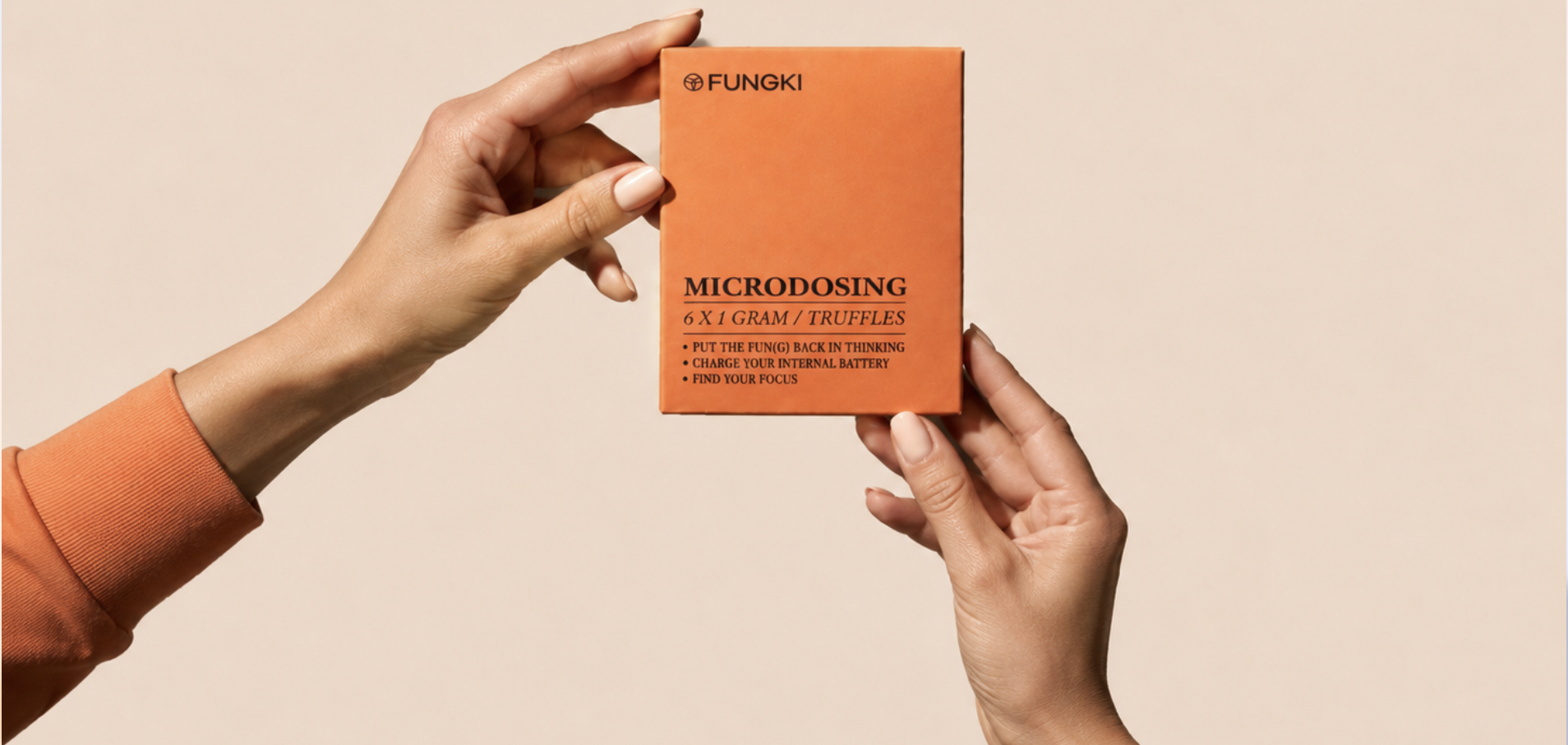
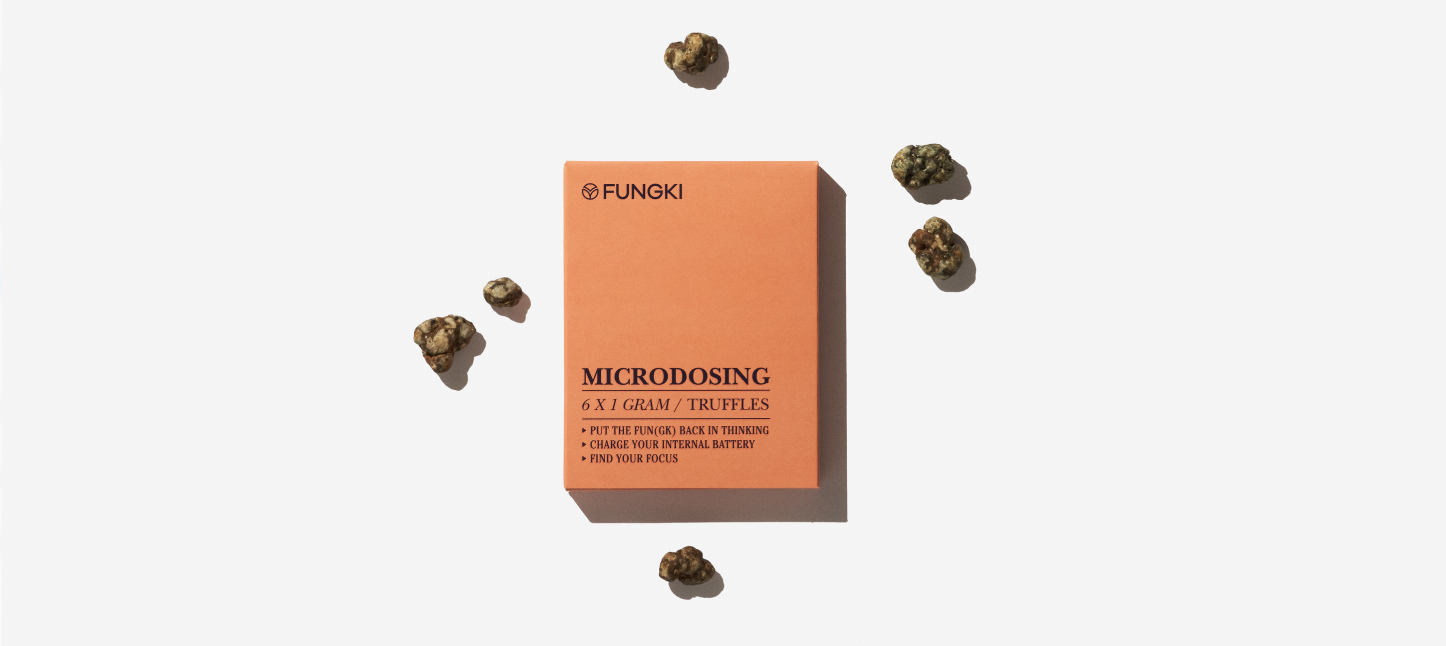
Psilocybin truffles are legal in the Netherlands. Fungki offers truffles specifically developed for microdosing: small, easy to take, and neutral in taste and smell.
What works best: combining or choosing?
The honest answer is that most people benefit from a combination, not from one single supplement. Think of it like this:
- A strong foundation with omega-3 and magnesium, for those who want to support the basics.
- Rhodiola or Lion’s Mane as daily support for focus and resilience.
- Psilocybin microdosing for those looking for a deeper effect on concentration, creativity and mood, and who are willing to follow a structured protocol.
- Caffeine as a tool for specific moments, not as a long-term solution.
The combination of Lion’s Mane and psilocybin microdosing is increasingly mentioned in the world of mental performance. Both are linked to neuroplasticity: the brain’s ability to form new connections. Together, they may potentially support each other, although research in this area is still in its early stages.
The Fungki approach
Fungki is not a supplement webshop with a broad product range. We start at the core: psilocybin truffles for microdosing, specifically developed for regular use. Why truffles instead of capsules or drops? Because psilocybin in concentrated or liquid form falls under the Dutch Opium Act and is illegal in the Netherlands. Fresh truffles, however, are legal. When they are specifically cultivated for microdosing, they offer a reliable and consistent dose. That is why we believe in this approach: it allows us to offer a pure, natural and unprocessed product.
Our truffles are smaller than standard truffles, keep their full outer layer intact and are easy to swallow. They are neutral in taste and smell, which makes microdosing more accessible. We guide you through the process with structured protocols and email support, so you know what you are doing, why you are doing it and what you can expect.
Practical tips for better focus, beyond supplements
Supplements work best when the rest of your foundation is in place. A few things that have some of the strongest scientific support when it comes to concentration:
- Sleep. Seven to nine hours per night is not a luxury. Sleep deprivation has a direct and measurable negative effect on working memory, reaction speed and decision-making. No supplement can structurally compensate for a lack of sleep.
- Movement. Aerobic exercise increases the production of BDNF, a growth factor that supports neuroplasticity. Twenty to thirty minutes of moderate movement per day can already have a measurable effect on cognitive functioning. A good walk counts too.
- Deep work sessions. Focus is like a muscle you train. The Pomodoro principle, working in 25-minute blocks with short breaks, helps extend your attention span. Combine this with turning off notifications and working in a fixed, distraction-free environment.
- Nutrition. Your brain uses around twenty percent of your total energy intake. Stable blood sugar, enough protein and healthy fats give your brain the fuel it needs. Highly processed foods and sugar spikes tend to work against you.
When does a supplement make sense?
A focus supplement makes sense as an addition to a solid foundation: good sleep, enough movement and a diet that nourishes your brain. Without that foundation, a supplement will only do so much. Do you experience ongoing concentration problems or depressive symptoms? Always discuss this with a doctor or therapist to determine the best approach for you. Supplements, including psilocybin microdosing, are supportive tools and not a replacement for professional guidance.
Where to start
Want to start working with focus supplements yourself? Here’s a practical approach:
- First, build the foundation: omega-3, magnesium, sleep and movement. This is relatively simple and has the broadest effect.
- Add Lion’s Mane if you want to support your long-term cognitive health. Consistent use over four to eight weeks gives you the clearest picture.
- Consider microdosing if you want to go a step further. Start with Fungki’s Beginners Protocol, follow the Fadiman protocol — one day on, two days off — and keep track of what you notice.
Give it time. Cognitive changes are subtle and cumulative. If you stop after three days because you “don’t feel anything,” you haven’t really given the protocol a fair chance. Mental sharpness is not about finding the right pill. It is a combination of the right habits, the right support and the willingness to take it seriously. Fungki helps you build that foundation, with truffles as a starting point.
Disclaimer: The information in this article is educational in nature and does not replace professional medical or psychiatric advice. If you experience serious symptoms, including depression or ADHD, always consult a doctor or mental health professional.