Psilocybin shown to extend lifespan in cells and mice

New research. For years, psilocybin—the active compound found in psychedelic truffles and mushrooms—was primarily viewed through the lens of consciousness, therapy, and psychedelic experiences. The focus was on the mind: trauma, depression, and breaking deeply ingrained mental patterns. But new scientific research suggests we may have been looking at only part of the story.
Emerging evidence indicates that psilocybin’s effects may extend beyond the brain, potentially influencing fundamental biological processes linked to aging and cellular health. In other words, what began as a conversation about mental wellbeing may also have implications for how the body ages. While the research is still in its early stages, the findings are raising an intriguing question: what if psilocybin affects not only how we think and feel, but also how our cells function over time?
Not just mental health, but biological age
Within the worlds of longevity and biohacking, one question sits at the center of almost everything: How do we keep the body healthy, resilient, and functional for longer?
The usual answers tend to revolve around:
- Sleep
- Nutrition
- Exercise
- Stress management
- Supplements
- Cold exposure
- Mitochondrial health
Psychedelics rarely appeared on that list.
Until now. Researchers discovered that psilocin—the compound that psilocybin is converted into inside the body—significantly extended the lifespan of human cells in laboratory experiments.
In human skin and lung cells, lifespan extension ranged from approximately 29% to as much as 57%.
That almost sounds like science fiction. What makes the findings particularly interesting is that the cells continued to function normally. They did not become immortal. They did not become dysfunctional. They simply appeared to age more slowly.
If future studies confirm these results, psilocybin may eventually be viewed not only as a tool for mental wellbeing, but also as a compound capable of influencing some of the biological mechanisms involved in aging itself.
The link between stress, aging, and psilocybin truffles
To understand why these findings matter, it helps to understand how aging works. Biological aging is not simply about the passing of time. It is also about wear and tear. Chronic stress, mental overload, poor sleep, and long-term inflammation can accelerate cellular damage. One of the ways scientists measure this process is through telomeres—the protective caps at the ends of our DNA.
As telomeres shorten, cells become biologically older and less capable of functioning optimally. This is where the research becomes particularly interesting. The study found that psilocin was better able to preserve telomere length compared to the control group. In other words, cells exposed to psilocin appeared to maintain one of the body’s key biological markers of cellular health for longer. This does not mean that psilocybin has been proven to reverse aging or rejuvenate the body.
However, it does suggest that psilocybin may influence some of the very processes that are typically accelerated by chronic stress and aging. As a result, researchers are beginning to explore whether the compound’s benefits may extend beyond mental wellbeing and into the broader field of healthy aging and longevity.
The biological mechanisms behind the effects
The most fascinating part of the study may not be the lifespan extension itself, but the biological changes that appeared to drive it. Researchers observed several mechanisms that are strongly associated with healthy aging and cellular resilience.
Increased SIRT1 activity
Psilocin increased the expression of SIRT1, a protein frequently linked to longevity, cellular repair, and stress resistance. Within longevity research, SIRT1 is often referred to as one of the body’s key “longevity proteins” because it plays an important role in maintaining cellular health and regulating aging-related processes.
Reduced oxidative stress
Researchers also observed a significant reduction in oxidative stress. Oxidative stress occurs when harmful molecules known as free radicals accumulate faster than the body can neutralize them. Over time, this contributes to:
- Aging
- Chronic inflammation
- Cognitive decline
- Fatigue
- Cellular damage
Psilocin appeared to activate protective pathways that help cells defend themselves against this type of damage.
Support for DNA stability
The study also reported positive changes in markers associated with DNA repair and cellular stability. Maintaining DNA integrity is essential for healthy aging. When DNA damage accumulates, cells become less efficient, more vulnerable to dysfunction, and increasingly prone to age-related decline. Taken together, these findings suggest that psilocin may influence more than just perception, mood, and cognition. The compound appears to interact with biological pathways that are directly involved in cellular maintenance, resilience, and the aging process itself. While much more research is needed, the results add to a growing body of evidence suggesting that the effects of psilocybin may extend far beyond the brain.
The mouse study may have been even more remarkable
In addition to the cellular research, the scientists also tested psilocybin in older mice. Not young, healthy animals, but mice whose age is roughly comparable to humans aged 60 to 65.
The results were striking:
- After ten months, 80% of the treated mice were still alive
- In the control group, that figure was approximately 50%
The researchers also observed visible differences between the groups:
- Better coat quality
- Less gray hair
- A more vital appearance
Importantly, this does not mean that psilocybin has been proven to extend lifespan in humans. However, for an early experimental study, the signals are remarkably strong and warrant further investigation.
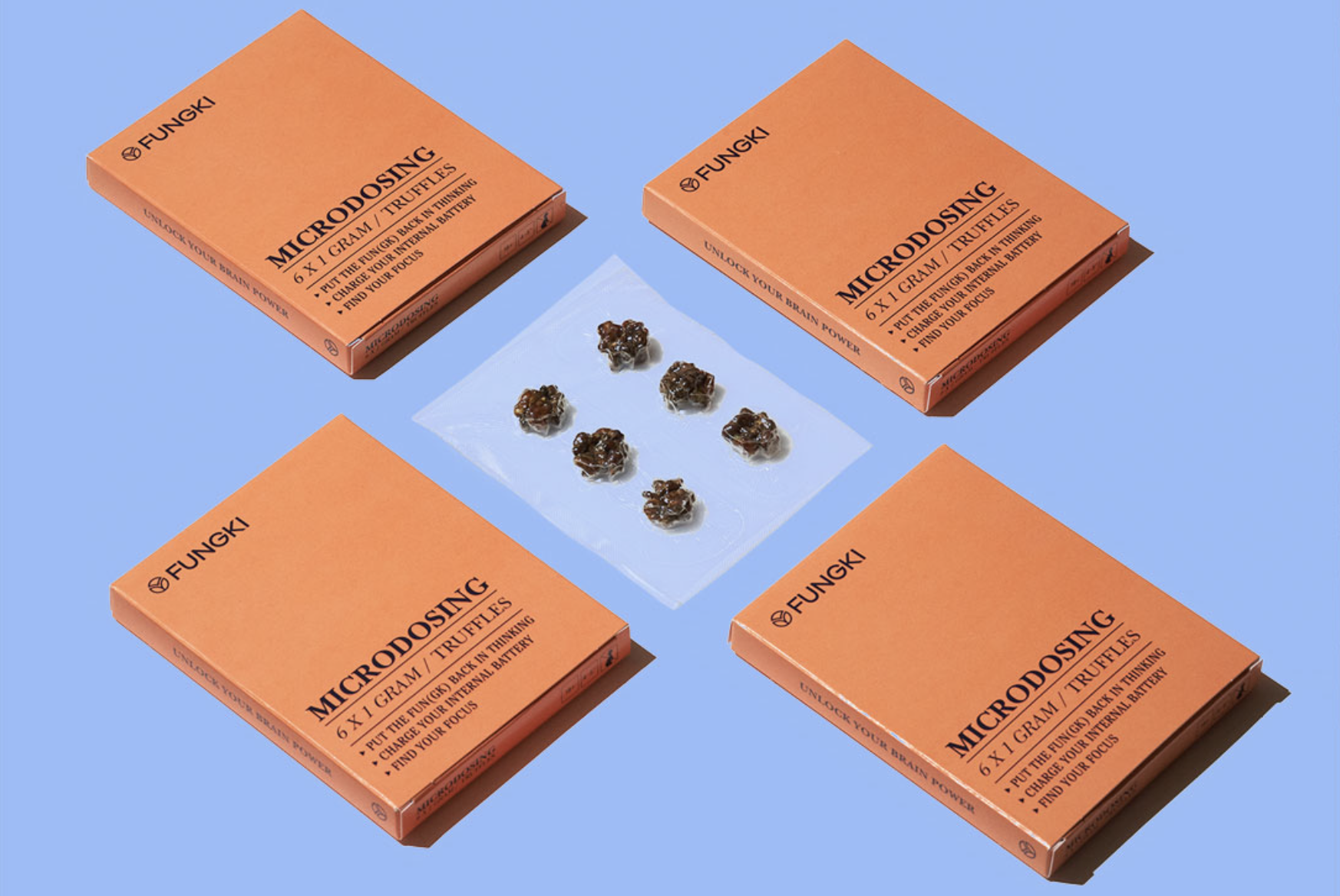
Why this is interesting for Fungki Microdosing
At Fungki, we believe that mental performance cannot be separated from physical health. Your brain is not an isolated system. Stress, focus, recovery, energy, sleep, and emotional balance all influence how your body functions over the long term.
Perhaps that is the real potential of psychedelics: not to escape life, but to function better within it. Not to push harder, but to become clearer. To reduce as much mental noise as possible.
Ultimately, longevity is not just about living longer. It is about:
- Staying mentally sharp
- Remaining emotionally resilient
- Maintaining your energy
- Preserving creativity
- Staying present in your own life
That is why research like this is so intriguing. It suggests that compounds such as psilocybin may affect more than mood or perception alone. They may also influence some of the biological processes that underpin long-term health and vitality. The science is still in its early stages, and many questions remain unanswered. But one thing is becoming increasingly clear: the conversation around psilocybin is expanding. From mental health to healthy aging. From consciousness to longevity.
A new generation of psychedelics
Over the coming years, psychedelics will likely shift from a niche therapeutic field into something much bigger. From recreation, therapy, and consciousness. To performance, recovery, longevity, stress regulation, and cognitive health. And perhaps this is only the beginning. The more we learn about the body, stress, and aging, the clearer one thing becomes: mental health and biological health are probably far more interconnected than we once thought. Psilocybin may ultimately play an important role in that connection. Of course, the science is still evolving, and much more research is needed before definitive conclusions can be drawn. But studies like this are expanding the conversation around what psychedelics may be capable of—and where their potential applications might lead in the future.
Read the full study
Psilocybin extends the lifespan of cells and mice