Why the US is investing in psilocybin research

Last weekend, the United States signed off on a decision to accelerate research into psychedelics. That moment is bigger than it seems. Not because something entirely new is emerging, but because what was already underway is now being formally recognized. Psychedelics are shifting from the fringes to a serious medical direction.
What’s actually changing
The United States isn’t choosing legalization. It’s choosing acceleration. Research into substances like psilocybin, MDMA, and ibogaine is being actively encouraged. Access to experimental treatments is being expanded. And agencies like the Food and Drug Administration are being directed to evaluate these therapies more quickly and with greater focus. The underlying message is clear: psychedelic research is no longer a niche – it belongs in the medical domain.
Why this is happening now
This decision didn’t come out of nowhere. It’s the result of three developments converging.
- The first results are too strong to ignore
Clinical studies show that psychedelics can, in some cases, have rapid effects on depression, trauma, and addiction – sometimes after just one or a few sessions. - Current solutions fall short
For a large group of people, existing treatments simply aren’t effective enough. That creates both space – and urgency – for new approaches. - Practice has moved ahead of policy
More and more people are already seeking out these treatments, often outside the traditional system. That puts pressure on regulation to catch up.
Together, these three lines lead to one clear conclusion:
the system can no longer ignore this.
But this is not a free pass
The nuance matters. This policy does not mean psychedelics are the solution. It means they need to be taken seriously – and studied properly, under the right conditions. Because:
- Many studies are still limited in scale
- Placebo effects may play a role
- Safety, especially with heavier substances like ibogaine, remains a real concern
In other words: the research is promising, but not yet definitive. And that’s exactly why this moment matters – this is what’s needed to move forward.
The shift beneath it
The real change goes deeper than the substances themselves. We’re moving from symptom management to influencing the underlying processes of the brain. Think of:
- Neuroplasticity
- Mental flexibility
- Breaking entrenched patterns
In the right context, psychedelics appear to open something within those processes. And that’s exactly what makes this so interesting.
Where microdosing fits (and where it doesn’t)
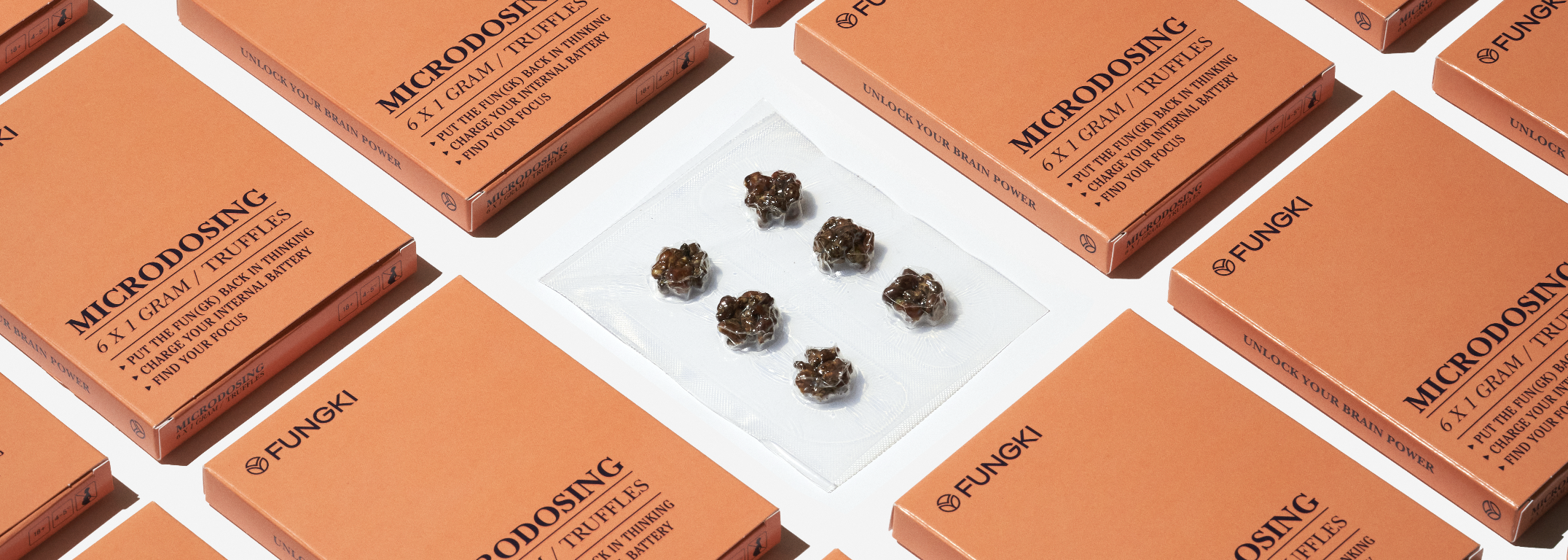
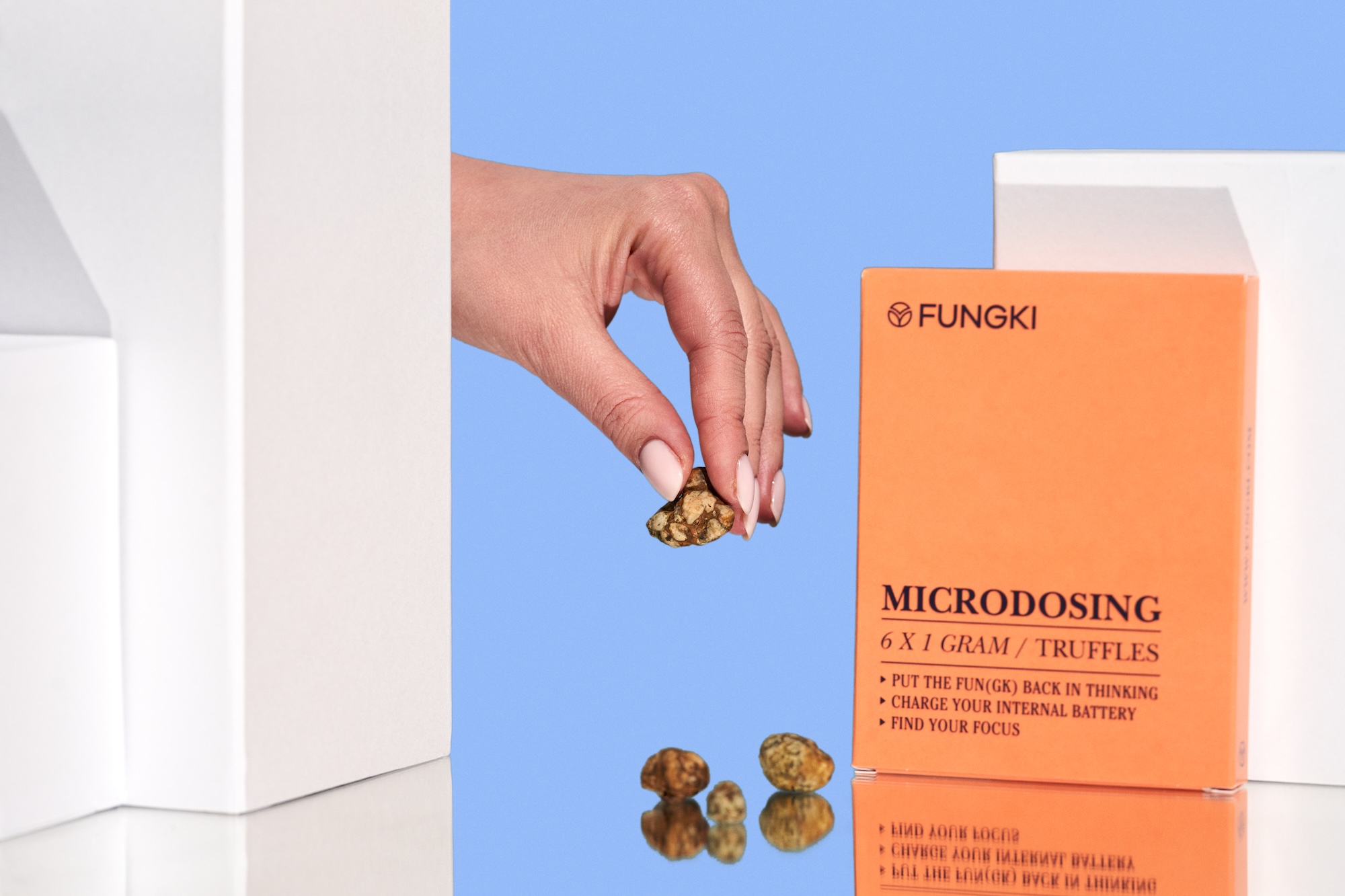
What’s being studied right now are primarily intensive, clinical interventions – guided sessions, often with higher doses, aimed at serious conditions. Microdosing sits on the other end of the spectrum: subtle, structured, and integrated into daily life. Not intended as a treatment for severe disorders, but as support for: focus, clear thinking and consistent mental performance. That distinction is often overlooked –
but it’s essential.
The Fungki perspective
At Fungki, we don’t see microdosing as a standalone intervention. We see it as part of a system: a protocol, built on rhythm. Not a peak experience. Not a quick fix. But a way to consistently support how you think, work, and perform.
What’s striking is not just that this conversation is happening, but the level at which it’s happening. Not because of the U.S. itself, but because of what it signals underneath:
Psychedelics and mental performance are finally being taken seriously.
Not as something abstract. But as something you can train, direct, and improve. And that may be the most important shift of all.